(Washington, DC) – Rights-respecting democracies should form a strategic alliance to preserve the rules-based international order, which is under threat from the Trump administration and the leaders of China and Russia, Human Rights Watch said today in its World Report 2026.
In the 529-page World Report 2026, its 36th edition, Human Rights Watch reviews human rights practices in more than 100 countries. In his introductory essay, Executive Director Philippe Bolopion writes that breaking the authoritarian wave sweeping the world is the challenge of a generation.
US President Donald Trump and a broadening authoritarian wave have wreaked havoc on human rights safeguards and protections around the world. Recent US abuses—from attacks on free speech to deporting people to third countries where they may face torture—underscore the administration’s assault on the rule of law. Combined with China’s and Russia’s longstanding efforts to weaken the rules-based global order, the Trump administration’s actions have enormous repercussions around the world.
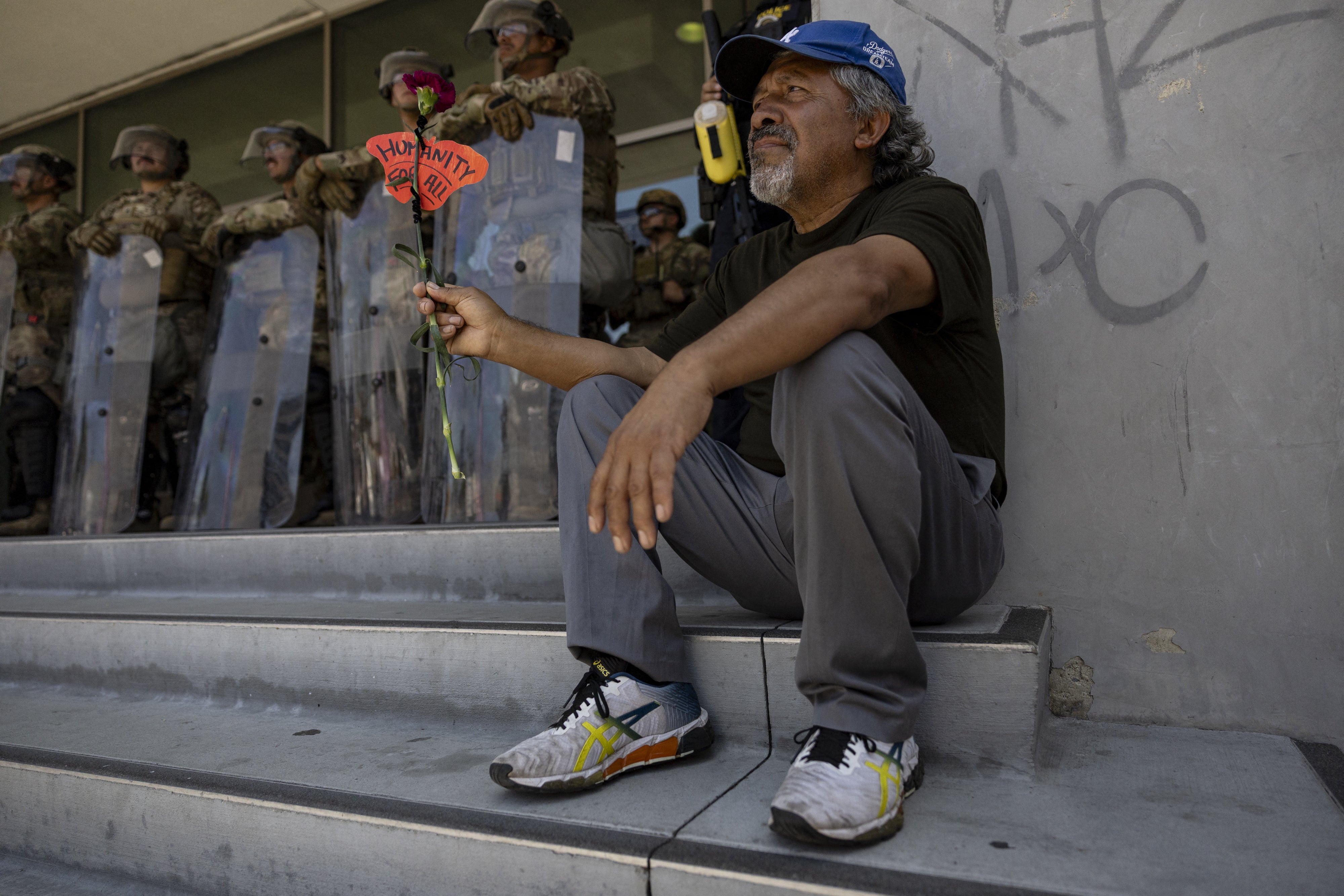
“The global human rights system is in peril,” said Philippe Bolopion, executive director at Human Rights Watch. “Under relentless pressure from US President Donald Trump, and persistently undermined by China and Russia, the rules-based international order is being crushed, threatening to take with it the architecture human rights defenders have come to rely on to advance norms and protect freedoms. To defy this trend, governments that still value human rights, alongside social movements, civil society, and international institutions, need to form a strategic alliance to push back.”
The US president has undermined trust in the sanctity of elections and reduced government accountability, Bolopion said. Trump has attacked judicial independence, defied court orders, gutted food assistance and healthcare subsidies, rolled back women’s rights, obstructed access to abortion care, undermined remedies for racial harm, stripped protections from trans and intersex people, and eroded privacy. He has also used the power of government to intimidate political opponents, the media, law firms, universities, civil society, and even comedians.
“Claiming a risk of ‘civilizational erasure’ in Europe and leaning on racist tropes to cast entire populations as unwelcome in the US, the Trump administration has embraced policies and rhetoric that align with white nationalist ideology,” Bolopion said. “Trump’s foreign policy has upended the foundations of the rules-based order that seeks to advance democracy and human rights. Trump has boasted that he doesn’t ‘need international law’ as a constraint, only his ‘own morality.’”
Trump’s foreign policy has been marked by a brazen disregard for US human rights obligations and a sharp turn away from efforts to make promoting human rights a meaningful focus of US diplomacy. The administration abruptly terminated nearly all US foreign aid, including funding that supported lifesaving humanitarian assistance. It also withdrew from multilateral institutions central to global human rights protection, including the United Nations Human Rights Council and the Paris Climate Agreement.
The US weakening of multilateral institutions also dealt a serious blow to global efforts to prevent or stop grave international crimes. The “never again” movement, born from the horrors of the Holocaust, and reignited by the Rwandan and Bosnian genocides, spurred the UN General Assembly to embrace the “responsibility to protect” (R2P) in 2005. Today, R2P is rarely invoked and the International Criminal Court is under siege.
Twenty years ago, the US government and civil society were instrumental in galvanizing a response to mass atrocities in Darfur. Sudan is burning again, but this time, under Trump, with relative impunity.
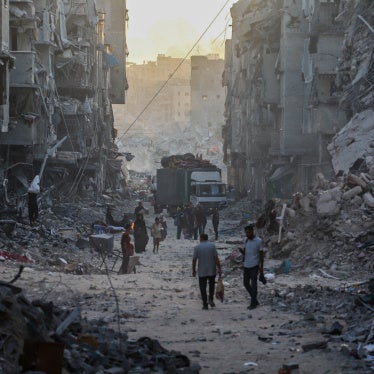
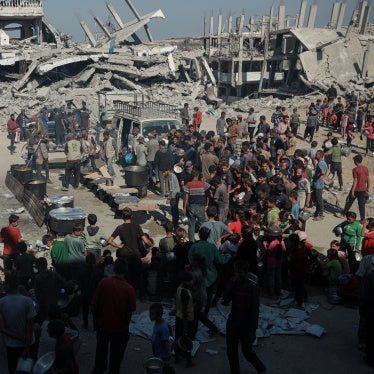
In the Occupied Palestinian Territory, the Israeli armed forces have committed acts of genocide, ethnic cleansing, and crimes against humanity, killing over 70,000 people since the October 2023 Hamas-led attacks on Israel and displacing the vast majority of Gaza’s population. These crimes were met with uneven global condemnation, and Trump continued a longstanding US policy of almost unconditional support to Israel, even as the International Court of Justice is weighing allegations of genocide.
In Ukraine, Trump’s peace efforts have consistently downplayed Russia’s responsibility for serious violations. Rather than applying meaningful pressure on Putin to end these crimes, Trump publicly berated Ukrainian President Volodymyr Zelenskyy, demanded an exploitative mineral deal, pressured Ukraine to concede large swaths of territory, and proposed “full amnesty” for war crimes.
With the US emphatically turning its back on human rights, some of the countries that could have led the battle to preserve human rights have been weakened by illiberal internal forces, Bolopion said. Governments are also held back by the fear of antagonizing the US and China, and many treat rights and the rule of law as a hindrance, rather than a benefit, to security and economic growth.
But if these countries come together, they could become a powerful political force and substantial economic bloc. It is critical to look beyond the usual candidates, Bolopion said. The multilateral order was built brick by brick by states from all regions. And the support for human rights has never come just from powerful democracies or countries with perfect domestic rights records.
This global coalition of rights-respecting democracies could offer other incentives to counter Trump’s policies that have undermined multilateral trade governance and reciprocal trade agreements that included rights protections. Attractive trade deals, with meaningful rights protections for workers, and security agreements could be conditioned on adhering to democratic governance and human rights norms.
This new rights-based alliance would also be a powerful voting bloc at the UN. It could commit to defending the independence and integrity of UN human rights mechanisms, providing political and financial support, and building coalitions capable of advancing democratic norms, including when opposed by superpowers.
Yet, even in the worst of times, the idea of freedom and human rights is enduring. People power remains the engine for change and protecting the rights of the most vulnerable, Bolopion said. In this more hostile world, the work of civil society is more critical than ever.
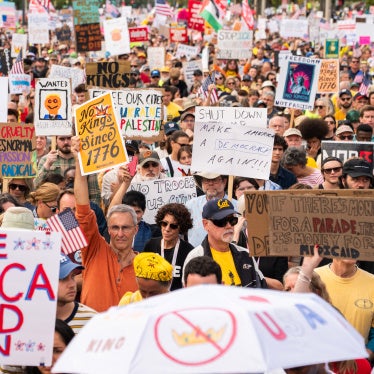
“Breaking the authoritarian wave and standing up for human rights is a generational challenge,” Bolopion said. “In 2026, it will play out most acutely in the US, with far-reaching consequences for the rest of the world. Fighting back will require a determined, strategic, and coordinated reaction from voters, civil society, multilateral institutions, and rights-respecting governments around the globe.”