(Bangkok) – The Chinese government intensified its repression across the country in 2025, Human Rights Watch said today in its World Report 2026.
President Xi Jinping mobilized the government to impose strict ideological conformity and loyalty to him and the Chinese Communist Party. Tibetans, Uyghurs, and other communities with distinct identities, including members of unofficial churches, face the most severe suppression of rights. Government repression of Hong Kong has also escalated.
“The Chinese government under Xi Jinping has amassed an increasingly disastrous human rights record, expanding and deepening its crackdown on fundamental freedoms,” said Maya Wang, deputy Asia director at Human Rights Watch. “Foreign governments have largely been unwilling to push back against the threats the Chinese government poses to the international human rights system, let alone within China.”
In the 529-page World Report 2026, its 36th edition, Human Rights Watch reviews human rights practices in more than 100 countries. In his introductory essay, Executive Director Philippe Bolopion writes that breaking the authoritarian wave sweeping the world is the challenge of a generation. With the human rights system under unprecedented threat from the Trump administration and other global powers, Bolopion calls on rights-respecting democracies and civil society to build a strategic alliance to defend fundamental freedoms.
- Xi Jinping visited Tibet in August and Xinjiang, where many Uyghurs live, in September, largely to demonstrate his government’s strong control. The government is expected to pass a draft law to justify repression of minorities, facilitate intensifying ideological control, and foster control abroad. Thousands of Uyghurs remain unjustly imprisoned. The government has banned celebration of Tibetan religious leader Dalai Lama’s 90th birthday in Tibet.
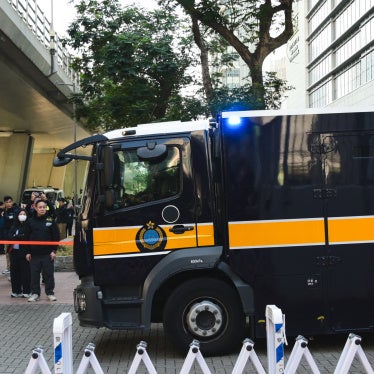
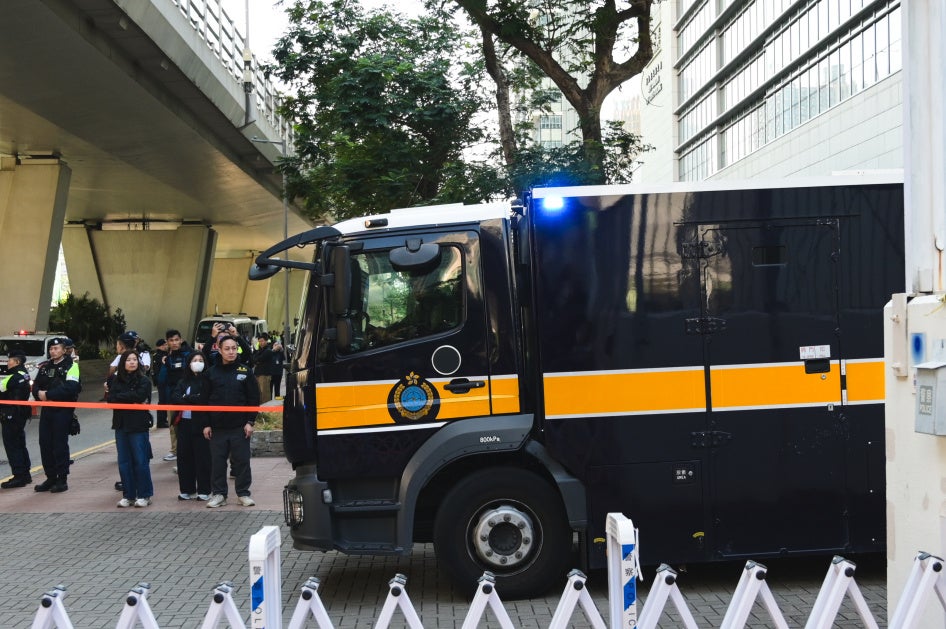
- Repression has escalated quickly five years since authorities imposed the draconian National Security Law on Hong Kong. Hong Kong’s last active pro-democracy party, the League of Social Democrats, disbanded. For the first time, authorities used the national security law to prosecute a Hong Kong-based family member of a critic based abroad, the pro-democracy leader Anna Kwok. Numerous pro-democracy leaders remain in jail, including Jimmy Lai, founder of the shuttered Apple Daily newspaper.
- The Chinese government’s campaign to “sinicize” religions—retooling them so they propagate Party ideology—has led to intensified crackdown on “house churches,” Protestant congregations that resist joining the official church. In April, a court in Shanxi province reportedly sentenced over a dozen people affiliated with the Linfen Golden Lampstand Church for “fraud.” In October, authorities also arrested nearly 30 affiliates of Zion Church including its pastor.
- The authorities have arbitrarily detained and imprisoned people for exercising their basic rights.
- As diaspora communities grow vocal against government abuses, Beijing has intensified efforts to silence them, harassing their families and friends in China, and imprisoning those who return, acts known as transnational repression. Recent examples include the arrest of France-based student activist Tara Zhang Yadi and the threatening of filmmakers to shut down the IndieChina film festival in New York.
The Chinese government should immediately end its crimes against humanity and other abuses in Xinjiang, revoke Hong Kong’s national security laws, allow independent observers access to Tibet and Xinjiang, and free detained human rights defenders throughout China, Human Rights Watch said.