(Beirut) – Iranian authorities in 2025 carried out executions on a scale unseen since the late 1980s, carried out mass killings in response to protests across the country, conducted mass and arbitrary arrests, and ratcheted up repression under the guise of national security, Human Rights Watch said today in its World Report 2026.
The deadly crackdown on the protests that erupted in late December escalated sharply in early 2026, as security forces carried out mass killings of protesters and bystanders, with the death toll rising to the thousands. Human Rights Watch found evidence of a coordinated escalation in the authorities’ use of unlawful and lethal force since January 8, including of protesters and bystanders killed or injured by gunshot wounds to their heads and torsos. Authorities committed massacres amid a nationwide internet shutdown and telecommunications restrictions they imposed to conceal the true scale of the atrocities.
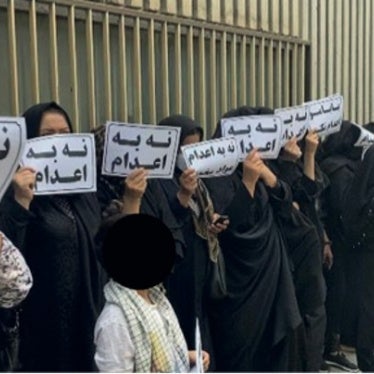
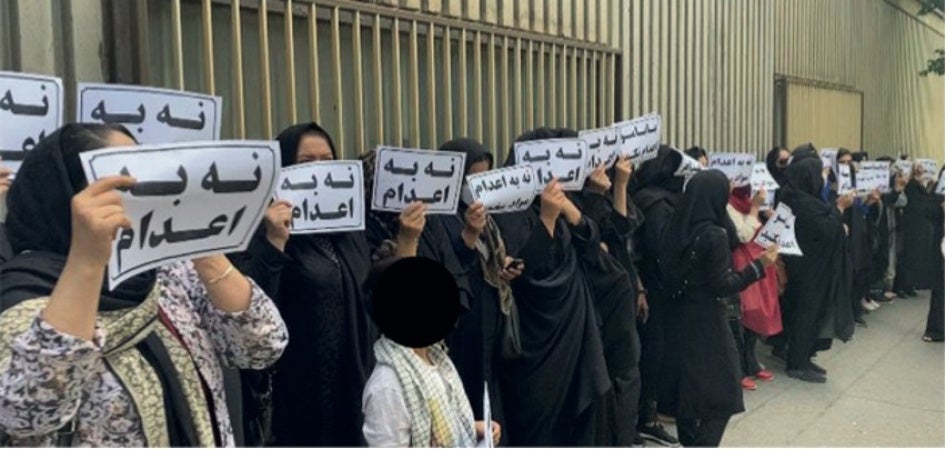
The year 2025 was characterized by widespread and systematic violations of the right to life, including through the application of the death penalty. By the end of December, Iran’s authorities had executed over 2,000 people according to the Abdorrahman Boroumand Center for Human Rights in Iran, the highest number of known executions since the late 1980s. Over half of the executions were for drug-related offenses, blatantly violating international law. Executions followed systematic gross fair trial violations, and women and ethnic minorities, many of whom also belong to the Sunni religious minority, were increasingly targeted by the death penalty.
“The spiral of impunity and bloodshed resulted in an execution spree unseen in decades, in 2025, and the deadliest protest crackdown that led to unprecedented mass killings of thousands of protesters and bystanders this year,” said Bahar Saba, senior Iran researcher at Human Rights Watch. “The international community should urgently pursue concrete accountability measures through all available avenues, including universal jurisdiction, to hold those responsible to account.”
In the 529-page World Report 2026, its 36th edition, Human Rights Watch reviews human rights practices in more than 100 countries. In his introductory essay, Executive Director Philippe Bolopion writes that breaking the authoritarian wave sweeping the world is the challenge of a generation. With the human rights system under unprecedented threat from the Trump administration and other global powers, Bolopion calls on rights-respecting democracies and civil society to build a strategic alliance to defend fundamental freedoms.
- Iran’s security forces carried out mass killings of protesters after nationwide protests escalated on January 8, 2026. The mass killings by Iranian security forces are a stark reminder that rulers who massacre their own people will keep committing atrocities until they are held to account.
- Over half of the executions were for drug-related offenses, blatantly violating international law. Executions followed systematic gross fair trial violations, and women and ethnic minorities, many of whom also belong to the Sunni religious minority, were increasingly targeted by the death penalty.
- Iranian authorities’ brutal repression of dissent and transnational repression continued. Hundreds of dissidents, human rights defenders, lawyers, journalists, members of ethnic and religious minorities, dual and foreign nationals, and others exercising their human rights remained arbitrarily detained in Iran.
- Authorities maintained and implemented a system of subjugation of women, including laws and policies imposing the discriminatory and degrading compulsory hijab, with official statements in the final months of the year signaling a renewed wave of crackdowns.
- Torture and other ill-treatment, including deliberate denial of medical care to prisoners, remained systematic and widespread. Punishments included flogging and amputations, which constitute torture.
- Authorities’ repression of ethnic and religious minorities continued, including the crime against humanity of persecution against Baha’is.
- Human Rights Watch found that Israeli forces unlawfully attacked Evin prison in Tehran on June 23 absent any evident military target, killing and injuring scores of civilians in an apparent war crime. The strikes were followed by ill-treatment and enforced disappearances of political prisoners at the hands of Iran’s authorities. Human Rights Watch also investigated five Iranian ballistic missile strikes that struck populated areas of Israel and killed 20 civilians and found that they were also likely war crimes.