(Brussels, February 4, 2026) – European Union institutions and member states’ failure to prioritize human rights undermines the rule of law, democratic space, and rights protection at home and abroad, Human Rights Watch said today in its World Report 2026.
A focus on deterring migration, combined with the normalization of anti-gender, anti-migrant, and anti-democratic narratives, inconsistent enforcement of the rule of law, shrinking space for civil society, and accusations of double-standards in its foreign policy have undermined the bloc’s fundamental values.
“From migration to the rule of law to foreign policy, the EU is neglecting human rights and accountability in ways that harm democracy and leave people vulnerable to abuse,” said Benjamin Ward, acting Europe and Central Asia director at Human Rights Watch. “In the face of an unstable world and threats in Europe, it’s vital for that the EU to consistently stands up for core human rights values.”
In the 529-page World Report 2026, its 36th edition, Human Rights Watch reviews human rights practices in more than 100 countries. In his introductory essay, Executive Director Philippe Bolopion writes that breaking the authoritarian wave sweeping the world is the challenge of a generation. With the human rights system under unprecedented threat from the Trump administration and other global powers, Bolopion calls on rights-respecting democracies and civil society to build a strategic alliance to defend fundamental freedoms.
- The European Commission proposed a Returns Regulation that would expand the use of detention for asylum seekers and migrants, remove safeguards against unsafe deportations, and pave the way for so-called return hubs in countries outside the EU. Several member states restricted or suspended access to asylum procedures without any substantive response from EU institutions, while the European Commission moved toward making it easier for member states to swiftly reject asylum applications without meaningful review.
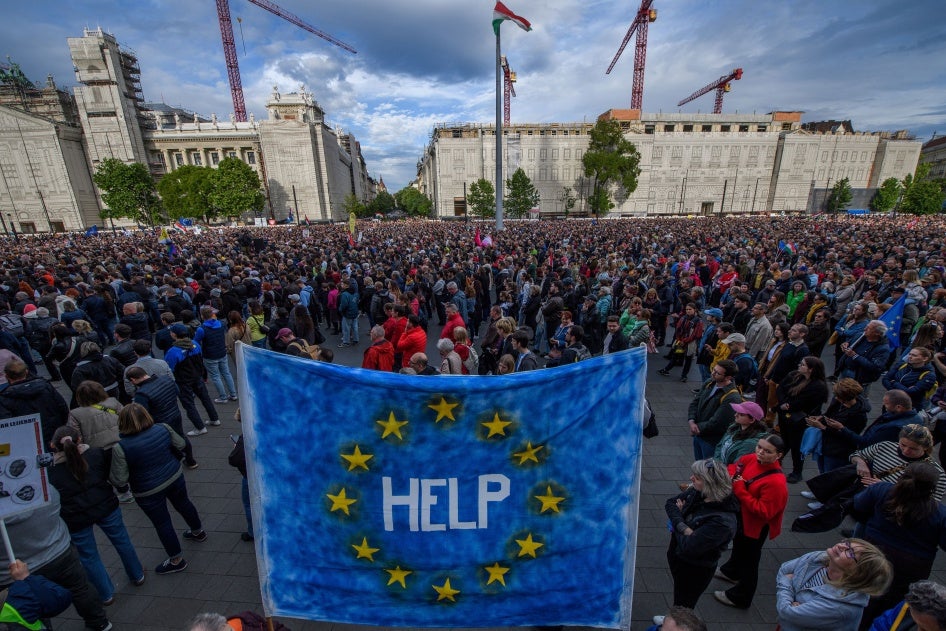
- Member states continued to backslide on rule of law commitments. Despite long-standing rule of law breaches by the Hungarian government, the EU Council failed to take decisive action to hold Hungary to account. During 2025, Hungary withdrew from the International Criminal Court and hosted Israeli Prime Minister Benjamin Netanyahu, wanted on an ICC warrant, without arresting him for war crimes and crimes against humanity in Gaza.
- The influence of far-right parties and the emulation of their anti-rights policies by mainstream parties fueled discrimination against marginalized communities, including migrants, Muslims, and lesbian, gay, bisexual, and transgender (LGBT) people. The Commission adopted and worked to renew existing strategies focused on protecting groups facing discrimination, including women, LGBT people, and racialized communities. But proposals like a Horizontal Equal Treatment Directive, which aims to close significant legal gaps in protection against discrimination based on religion, disability, age, and sexual orientation, remain stalled.
- Despite some progress to improve economic, social, and cultural rights protections, implementation lags among member states, leaving 93.3 million people (21 percent of the population) at risk of poverty or social exclusion in 2024. Unemployment was a key factor.
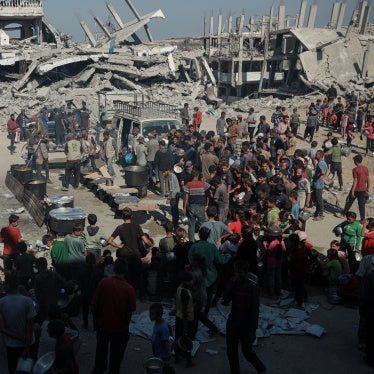
- The EU adopted further sanctions on Russia and Russian officials over human rights violations and crimes committed in the full-scale invasion of Ukraine. EU states reaffirmed commitments to accountability for war crimes committed in Ukraine, but unlike in previous years, the European Council failed to express its support for the ICC’s proceedings on Ukraine. The response to the Israel military’s atrocities in Palestine remained the most divisive issue for EU governments and their reluctance to act amid Israel’s atrocities increased after the ceasefire announcement in October.
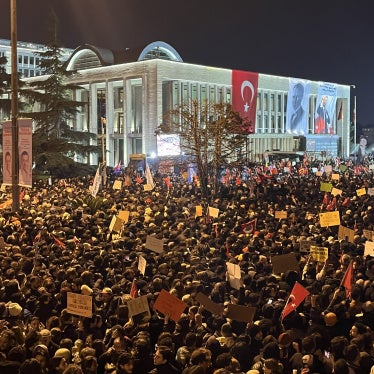
- The EU prioritized engagement on security, trade, and migration control with repressive leaders in Türkiye, Tunisia, Egypt, Gulf states, China, and India, to the detriment of upholding human rights in these countries.
In addition to a chapter on EU-wide developments, the World Report 2026 includes individual chapters on France, Germany, Greece, Hungary, Italy, Poland, and Spain.
“The EU can and should be a force for good in the world and for people living inside the bloc,” Ward said. “That can only happen if its institutions and member governments take their treaty obligations to protect and promote human rights seriously and apply them consistently.”