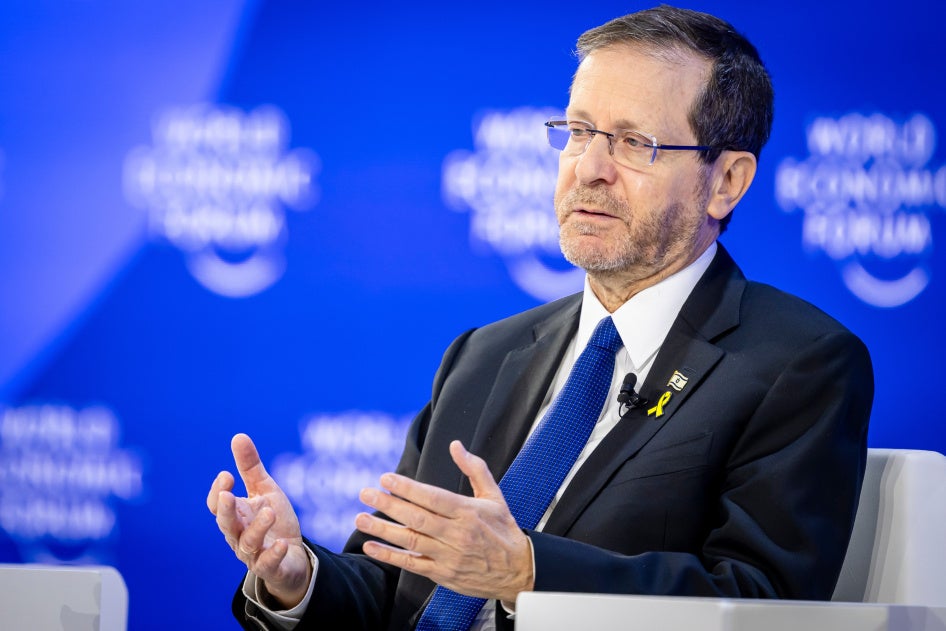
In the wake of the Bondi Hannukah attack, the deadliest mass shooting in Australia in three decades, Prime Minister Anthony Albanese invited Israeli President Isaac Herzog to visit, to “engage with members of the Jewish community who are grieving the loss of 15 innocent lives.”
President Herzog is Israel’s head of state, with a constitutional and ceremonial role. Although Herzog’s trip is focused on the Bondi attacks and the antisemitism many Australian Jews have been experiencing, it is impossible to ignore violations by the government Herzog represents.
On October 13, 2023, Herzog stated in reference to the Hamas-led October 7 attacks, “it’s an entire nation out there that is responsible. It is not true, this rhetoric about civilians who were not aware and not involved. It is absolutely not true.” Herzog is hardly a champion of human rights.
He is not the subject of an International Criminal Court (ICC) arrest warrant, unlike Prime Minister Benjamin Netanyahu, or the former defense minister, Yoav Gallant. However, based on Herzog’s October 13 statement, he was recently one of a handful of Israeli leaders accused of “direct and public incitement to commit genocide” in a United Nations Commission of Inquiry report.
In 2023, South Africa filed a case with the International Court of Justice alleging that Israel has violated the 1948 Convention on the Prevention and Punishment of the Crime of Genocide in which it referred to statements by Herzog and other senior Israeli officials as evidence of Israel’s genocidal intent. This case is ongoing.
Herzog’s visit also comes at a time when Israeli authorities are expelling humanitarian agencies from Gaza, where Palestinians face dire humanitarian conditions. In the West Bank, settlements are being expanded, and settler attacks and violence against Palestinians are rising.
While showing appropriate concern for the Jewish community, the Australian government should not shy away from denouncing and pushing for an end to the Israeli government’s longstanding serious violations of human rights and international humanitarian law.
Australia should look to whether its domestic laws could be used to investigate and prosecute serious international crimes committed in Israel and Palestine, and make clear that as an ICC member it stands ready to carry out the court’s arrest warrants across its docket.