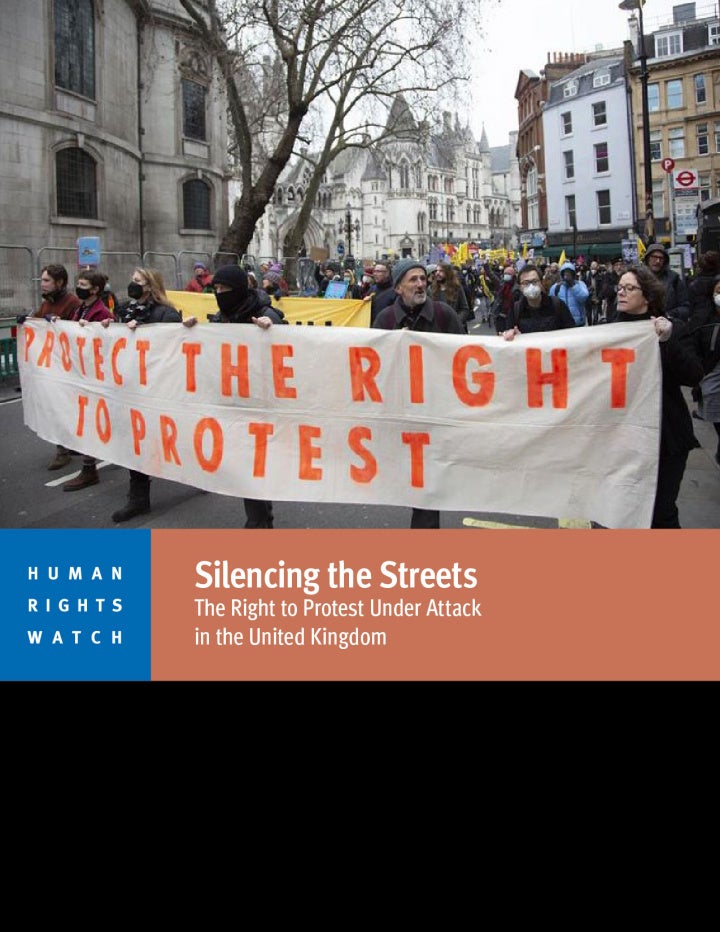
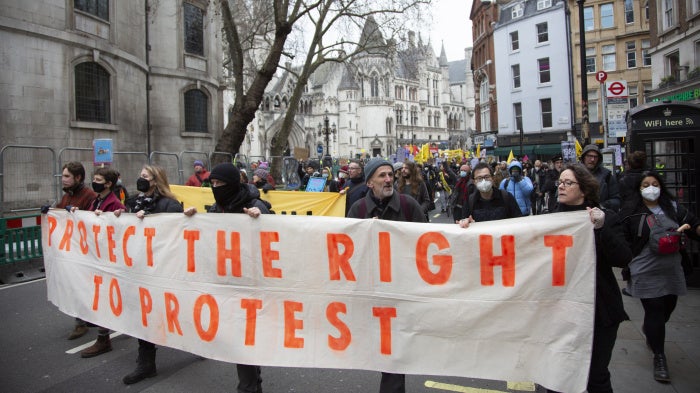
The Right to Protest Under Attack in the United Kingdom
The 47-page report, “‘Silencing the Streets’: The Right to Protest Under Attack in the UK,” documents that the UK’s Labour government has failed to reverse sweeping anti-protest laws introduced by the previous Conservative government. Instead, Labour has attempted to expand them with the Crime and Policing Bill 2025 and through the unprecedented misuse of terrorism legislation to target and criminalize peaceful protest. The Crime and Policing bill, pending before parliament, is to be debated in the House of Lords in January 2026.
As the millennium draws near, multi-party democracies appear stable throughout most of Latin America and the Caribbean, with the notable exception of Cuba, where the government of Fidel Castro celebrated its fortieth anniversary in power on January 1, 1999, with no sign of a significant political opening on the horizon.
This sixty-page report documents how, as rebels took control of the city in January 1999, they made little distinction between civilian and military targets. Testimonies from victims and survivors describe numerous massacres of civilians gathered in houses, churches and mosques. One massacre in a mosque on January 22 resulted in the deaths of sixty-six people.
The Global Use of Child Soldiers: An estimated 300,000 children under the age of eighteen are currently participating in armed conflicts in more than thirty countries on nearly every continent. While most child soldiers are in their teens, some are as young as seven years old.
The announcement by the U.S. Defense Department at the end of April of a move toward the use of more Aarea weapons in Operation Allied Force, and the reports of a growing shortage of precision-guided weapons, point to an increased use of unguided (dumb) weapons by North Atlantic Treaty Organization (NATO) forces in the war against Yugoslavia, including so-called cluster bombs.
On Wednesday, 26 May 1999 the Israeli Supreme Court, sitting as the High Court of Justice, will hear testimony challenging the legality of secret interrogation procedures used by the Israeli General Security Service (GSS).
Over the past forty years, Cuba has developed a highly effective machinery of repression. The denial of basic civil and political rights is written into Cuban law. In the name of legality, armed security forces, aided by state-controlled mass organizations, silence dissent with heavy prison terms, threats of prosecution, harassment, or exile.
A Report by Adhoc, Licadho, and Human Rights Watch
In this report, three human rights organizations urged the Royal Cambodian Government to end impunity for perpetrators of human rights violations in Cambodia.
Some forty-five civilians were reported killed and more than one hundred wounded after the army opened fire on protestors near Lhokseumawe, in North Aceh on May 3, 1999. The death toll could well rise. The army claimed they had used only rubber bullets and had fired in self-defense after shots were fired at their troops.
On February 15, 1999, Abdullah Ocalan, leader of the Kurdish Workers' Party (PKK), was apprehended in Kenya and transported to Turkey, where he has been held ever since on the prison island of Imrali. Ocalan's trial is scheduled to begin before the Ankara State Security Court on May 31, and will take place on the island of Imrali.
Denied political, and cultural rights, Kurds have been the principal victims of the Turkish state's excesses since the military coup of 1980. (It should be noted that, ironically--or tragically--the majority of victims of PKK abuses have also been Kurds.)
The Niger Delta has for some years been the site of major confrontations between the people who live there and the Nigerian government's security forces, resulting in extrajudicial executions, arbitrary detentions, and draconian restrictions on the rights to freedom of expression, association, and assembly.
On Thursday, May 20, Human Rights Watch and three other human rights organizations released a document that was smuggled out of Guatemalan military files. The document reveals the fate of more than 180 individuals "disappeared" by Guatemalan security forces between August 1983 and March 1985.
Human Rights Watch commends Governor Pataki for placing reform of the state's drug sentencing laws on the legislative agenda for 1999. He has taken a step in the right direction by recognizing the need to lower the highest sentences imposed under the current laws and to increase the number of addicted defendants placed in drug treatment programs.
The U.S. Defense Department at the end of April announced a move toward the use of more "area weapons" in Operation Allied Force. At the same time, there are reports of NATO's growing shortage of precision-guided weapons. These factors suggest NATO may increasingly rely on unguided ("dumb") weapons, including so-called cluster bombs.
Acts such as rape, sexual assault, sexual slavery, forced prostitution, forced sterilization, forced abortion, and forced pregnancy may all qualify as crimes under national and international laws.