The Right to Protest Under Attack in the United Kingdom
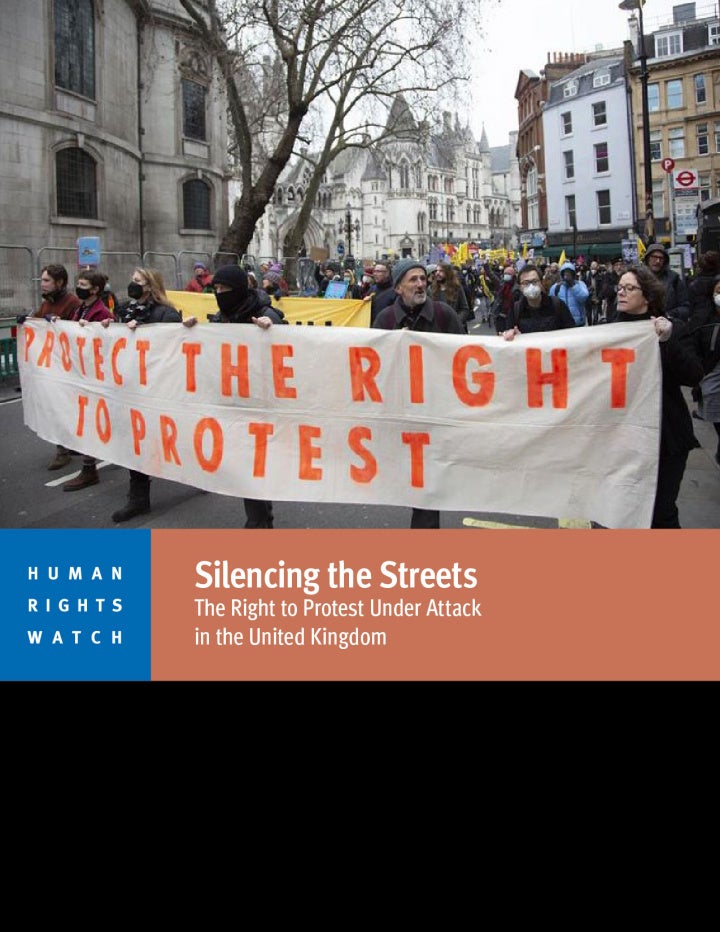
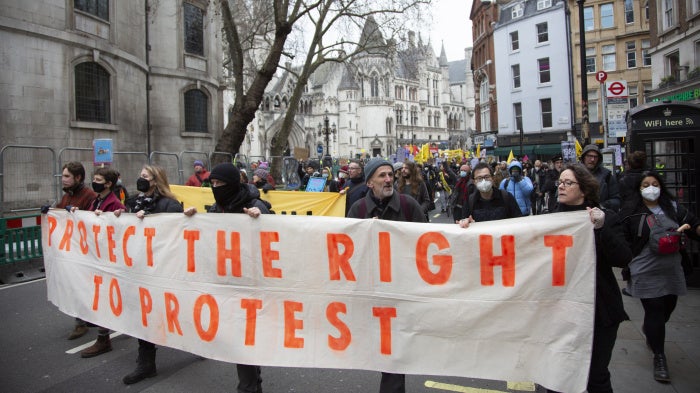
The 47-page report, “‘Silencing the Streets’: The Right to Protest Under Attack in the UK,” documents that the UK’s Labour government has failed to reverse sweeping anti-protest laws introduced by the previous Conservative government. Instead, Labour has attempted to expand them with the Crime and Policing Bill 2025 and through the unprecedented misuse of terrorism legislation to target and criminalize peaceful protest. The Crime and Policing bill, pending before parliament, is to be debated in the House of Lords in January 2026.
The Committee to Protect Journalists and the the Americas Watch mission to Haiti from August 12-15,1984 to investigate a recent crackdown on the press.
A Report on Human Rights in Haiti Based on a Mission of Inquiry
This 17- page report by the Americas Watch and the Lawyers Committee for International Human Rights finds that the circumstances in which the February 12, 1984 elections were held in Haiti involved, in the words of US Secretary of State George Shultz, a denial of "all the preliminary aspects that make an election really mean something."
This 24 page report by the Lawyers Committee for International Human Rights, Americas Watch Committee, and the International League for Human Rights examines the situation of people who support human rights in Haiti, and in particular a series of detentions in May 1983.
A Fund for Free Expression Report by Meron Benvenisti
In its pre-publication review of Palestinian newspapers and magazines, Israel’s military censor blocks the publication not only of supposed national security secrets or material likely to incite violence. Rather, the censor’s primary concern, as shown through a study of banned materials, is to eradicate expression that could foster Palestinian nationalist feelings; suggests Palestinians are a nation with a national heritage; denies Israel’s legitimacy; or imputes behavior to Israeli officials that suggests illegitimacy. Palestinian editors must submit for review all material meant for publication, including photos, advertisements, and crossword puzzles. The censor’s list of banned books included some 1,600 titles, at the time this report was prepared.