Human Rights Watch appreciates the opportunity to provide a submission to the Foreign Affairs, Defence and Trade References Committee on democracy and human rights in Myanmar. Five years since the February 2021 military coup, the Myanmar junta’s assault on the population has decimated the country’s infrastructure, economy, civil and political life, rule of law, and healthcare and education systems.
The military’s atrocities since the coup, which include war crimes and crimes against humanity, escalated over the past year as the junta sought to entrench its rule through abusive military operations and fraudulent elections.
1. Repression and Sham Elections
Throughout 2025, the junta ramped up violence and repression to lay the groundwork for sham elections, which serve as a centerpiece of its efforts to crush all political opposition and derail the restoration of civilian rule. Held in three phases between December 28, 2025, and January 25, 2026, the polls were organized to ensure the electoral victory of the military proxy party, the Union Solidarity and Development Party (USDP), and obtain legitimacy for the military-controlled state. As expected and by design, the military has claimed a landslide victory for the USDP.
Since the coup, the junta has systematically dismantled the rule of law and the country’s nascent democratic institutions. The military takeover effectively ended the country’s halting and limited democratic transition under Aung San Suu Kyi’s National League for Democracy (NLD). During general elections in November 2020, the NLD secured 82 percent of contested seats, roundly defeating the USDP. In response, the military alleged widespread voter fraud, an unfounded claim rejected by the Union Election Commission and international and domestic election observers. On February 1, 2021, the military detained President Win Myint, Aung San Suu Kyi, and scores of other NLD ministers, members of parliament, and regional administrators, thereby depriving Myanmar’s people of their right to choose their government as enshrined in international law.
In the months following the coup, the junta arrested at least 197 ministers and members of parliament and 154 Union Election Commission officials. Suu Kyi and Win Myint are serving prison sentences of 27 and 8 years, respectively, on a slew of fabricated charges.
In January 2023, the junta enacted a new Political Party Registration Law designed to disqualify senior NLD members from participating in elections, violating international standards on the rights of political parties to organize and for their candidates to run for election. In March that year, the junta announced the NLD was among 40 political parties and other groups dissolved for failing to register under the new law. The junta disbanded four additional parties in September 2025 for failing to meet the law’s requirements.
The junta had previously declared the opposition National Unity Government and its parliamentary body, the Committee Representing Pyidaungsu Hluttaw, as “terrorist organizations.” Opposition groups have made clear they oppose any election under the junta.
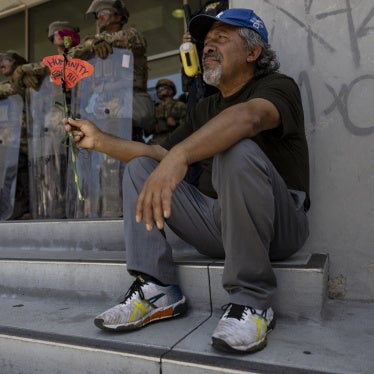
In July 2025, the junta passed an “election protection” law criminalizing criticism of the election, prohibiting any speech, organizing, or protest that disrupts any part of the electoral process. Violators can face up to 20 years in prison and the death penalty. Authorities have taken legal action against over 400 people under the new law, including children, for social media activity, distributing stickers and leaflets, delivering speeches, and other alleged acts of election “interference” and “disruption.”
The military has limited or no control over significant parts of the country; elections were not held in 65 of the country’s 330 townships due to conflict.
China and Russia, the junta’s primary suppliers of aircraft and arms, both sent election observers to the polls. The two countries have long supported the junta while blocking international action on military atrocities at the UN Security Council. Malaysia, last year’s chair of the Association of Southeast Asian Nations (ASEAN), said the bloc did not send observers to certify the polls.
2. Conflict Abuses
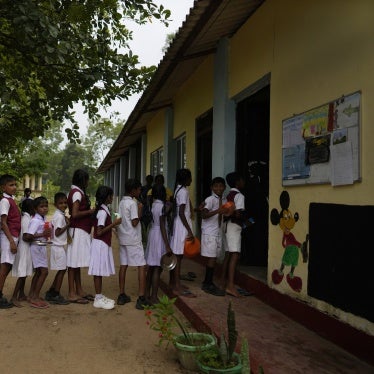
The Myanmar military carried out increasing airstrikes in 2025, including deliberate and indiscriminate attacks on civilians in opposition-held areas. Military airstrikes have struck residential areas, schools, hospitals, religious sites, and camps for internally displaced people (IDPs), killing thousands. Fighting has spread to all 14 of Myanmar’s states and regions.
The military’s growing use of armed drones, paramotors, and gyrocopters to carry out unlawful attacks is creating new threats for civilians. On October 6, a military paramotor (motorized paraglider) attack on a Buddhist festival at a primary school in Sagaing Region, killed at least 24 people, including 3 children. More than 135 paramotor attacks have been reported since December 2024.
Myanmar is one of very few countries that continue to use internationally banned cluster munitions and antipersonnel landmines.
Since enacting the People’s Military Service Law in February 2024, the junta has carried out conscription through abusive tactics such as abducting young men and boys and detaining family members of missing conscripts. The military’s recruitment and use of child soldiers has surged since the coup.
The junta enforces deadly blockages of humanitarian aid as a method of collective punishment against civilian populations. These blockages sustain the military’s longstanding “four cuts” strategy, designed to maintain control of an area by isolating and terrorizing civilians.
Following the March 2025 earthquake that struck central Myanmar, the junta obstructed access to lifesaving services in opposition-held areas. The junta’s years of unlawful attacks on healthcare facilities and health workers severely hampered the emergency response. Despite announcing a ceasefire, the military carried out more than 550 attacks in the two months following the quake.
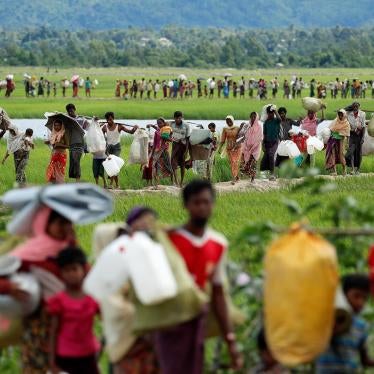
Military abuses and spiraling fighting have internally displaced at least 3.6 million people. Foreign aid cuts, skyrocketing prices, and restrictions on medical care and humanitarian supplies have exacerbated malnutrition, waterborne illness, and preventable deaths. Over 15 million people are facing acute food insecurity, with Rakhine State especially impacted.
3. Arbitrary Detention, Torture, and Ill-Treatment
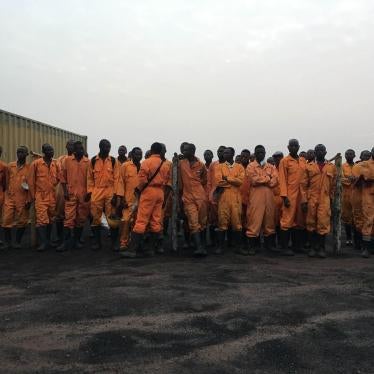
Junta authorities have arrested more than 30,000 people since the coup, including over 6,200 women and 625 children. Security forces target activists, journalists, humanitarian workers, lawyers, and religious leaders. Authorities also detain family members, including children, and friends of activists as a form of coercion and collective punishment.
More than 2,200 people are reported to have died in junta custody, although the actual figure is likely higher. Torture, sexual violence, and other ill-treatment are rampant in prisons, interrogation centers, military bases, and other detention sites, with reports of rape, beatings, prolonged stress positions, electric shock and burning, denial of medical care, and deprivation of food, water, and sleep. Military personnel have frequently been responsible for sexual and gender-based violence during conflict and against people in detention.
The authorities have detained nearly 2,000 people since February 2022 for online activity supporting the opposition or criticizing the military, part of the junta’s gutting of freedoms of speech, the press, and assembly. In January 2025, the junta enacted a cybersecurity law that further restricts online content and expands surveillance.
With millions of Myanmar nationals having fled the country, the junta has cracked down on activists outside its borders through requests for deportations, digital surveillance, and revocation of passports. Myanmar refugees and migrants face increasing threats abroad and risk of forced returns.
4. Rohingya and Accountability
The Myanmar military has long subjected ethnic Rohingya to atrocity crimes, including the ongoing crimes against humanity of apartheid, persecution, and deprivation of liberty. Since late 2023, Rohingya civilians have been caught in the fighting between the junta and ethnic Arakan Army forces in Rakhine State. Both parties have carried out grave abuses, including extrajudicial killings, widespread arson, and unlawful recruitment. The Arakan Army, which now controls most of Rakhine State, has ramped up oppressive measures against Rohingya in northern Rakhine State, including forced labor and arbitrary detention. The conflict has internally displaced over 400,000 people internally and forced at least 150,000 Rohingya to flee into Bangladesh since late 2023.
From January to November 2025, an estimated 5,600 Rohingya attempted dangerous boat journeys from Myanmar and Bangladesh seeking refuge in third countries; more than 820 died or went missing.
In November 2024, the International Criminal Court prosecutor requested an arrest warrant for Sr. Gen. Min Aung Hlaing, leader of the junta, for alleged crimes against humanity committed against the Rohingya in 2017. The judges have not yet issued a public decision on the request. In January 2026, the International Court of Justice heard the merit hearings in Gambia’s case against Myanmar under the Genocide Convention. A ruling is expected in six months to a year.
5. Illicit Economies
Since the coup, trafficking, scam centers, and other illicit operations have proliferated, with Myanmar becoming the world’s top producer of opium and one of the main sources of synthetic drugs. Online scam centers along Myanmar’s border with Thailand—run by global criminal syndicates led by Chinese nationals—largely rely on human trafficking, forced labor, and torture to run their scams, part of a multibillion-dollar industry across the region.
Unregulated extraction of heavy rare earth metals in Myanmar has surged, primarily in Kachin and Shan States by Chinese-linked operators who export the raw materials for processing. More than 300 mining sites have been established without any environmental or labor standards, with devastating impact on the environment and communities’ health and safety. Use of chemical leaching mining processes has led to severe contamination of rivers, with elevated levels of arsenic and other toxic metals found downstream in Thailand.
Recommendations
Five years since the coup, the military’s escalating atrocities have been met with dwindling international aid and attention. The international response has thus far failed to exert sufficient leverage on the military, which continues to flagrantly violate the December 2022 Security Council resolution, ASEAN five-point consensus, and numerous other international calls. In coordination with other concerned governments, Australia should:
- Reject the results of the Myanmar junta’s fraudulent elections and any subsequent efforts by the junta to establish a so-called parliament. Counterbalancing the support from China, Russia, Belarus, and other countries backing the results requires a clear, emphatic message that these illegitimate elections will only entrench Myanmar’s military-dominated repression and abuses.
- Expand and better enforce sanctions, to cut off the military from the revenue funding its ongoing war crimes and crimes against humanity. Coordinate with likeminded governments to identify gaps in existing sanctions and institute a total ban on the sale of aviation fuel.
- Urge ASEAN member states to cooperate in enforcing sanctions in ASEAN jurisdictions by freezing assets and blocking transactions to sanctioned entities. In particular, press Thailand, where banks have continued to process payments to sanctioned entities, to comply.
- Expand engagement with Myanmar civil society actors, the National Unity Government, and local partners. Channel aid through local civil society groups and cross-border efforts, support unregistered organizations, adopt flexible reporting requirements, and allow the transfer of funds outside Myanmar’s formal banking system.
- Increase resettlement opportunities and alternative visas for education or work for Myanmar asylum seekers, including Rohingya. As Bali Process co-chair, Australia should uphold the forum’s commitment to burden sharing and collective responsibility for the rights of refugees and migrants laid out in the 2016 Bali Declaration.
- Explore every avenue for justice and accountability for the Myanmar security forces’ crimes against humanity, war crimes, and acts of genocide, including supporting the ongoing work of the International Criminal Court, the Independent Investigative Mechanism on Myanmar, and various universal jurisdiction cases. Upholding the rights of the Myanmar people depends on dismantling military impunity, establishing civilian democratic rule, and holding the generals to account.