
On January 29, the three-week hearings on the merits of Gambia’s genocide case against Myanmar before the International Court of Justice came to a close. The case, filed in 2019, alleges that Myanmar’s atrocities against ethnic Rohingya in 2016 and 2017 violate the Genocide Convention of 1948.
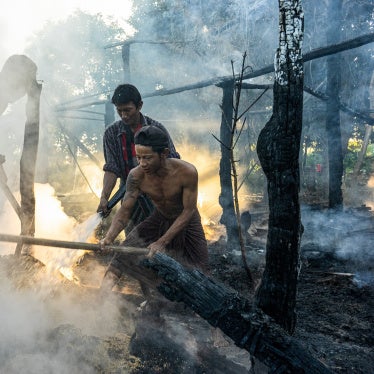
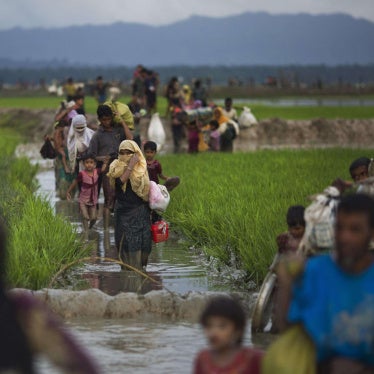
During the hearings, Gambia argued that the extreme brutality, pervasive sexual violence, targeting of children, and widespread burning and destruction of villages by Myanmar’s military against the Rohingya population are among the indicators of genocidal intent: to destroy the Rohingya, in whole or in part, on the basis of their identity as a national, ethnic, racial or religious group.
Judges also heard direct testimony in closed session from Rohingya from the villages of Min Gyi (Tula Toli), Chut Pyin, and Maung Nu in Myanmar’s western Rakhine State. They recounted children being shot, stabbed, and thrown in fires, as well as gang rape and families forced into burning buildings, atrocities that the United Nations, Human Rights Watch and others had previously reported.
Myanmar was represented at the hearings by Ko Ko Hlaing and Thida Oo, whom the United States, Canada, and other governments have sanctioned for their roles as ministers in the military junta. They argued that the 2016-2017 military operations were targeted counterterrorism operations and that no genocidal intent can be established.
Rohingya watching in the courtroom and from afar have long sought accountability for military atrocities, particularly as Rohingya remaining in Myanmar still face grave risk. Since the 2021 military coup, the junta has committed widespread abuses nationwide.
The case “is not about esoteric issues of international law,” Gambian Justice Minister Dawda Jallow said in his opening remarks. “It is about real people, real stories and a real group of human beings, the Rohingya of Myanmar.” They dream of being able to live in peace and safety in their homeland, he said. “Myanmar has denied them that dream. In fact, it turned their lives into a nightmare, subjecting them to the most horrific violence and destruction one could imagine.”
While a judgment in the case is not expected for at least six months, the hearings marked a critical moment in the Rohingya’s pursuit of justice, with accounts of their suffering being heard by the world’s top court.