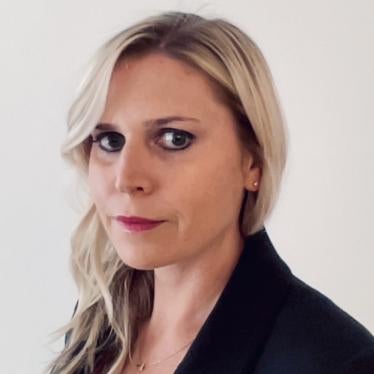
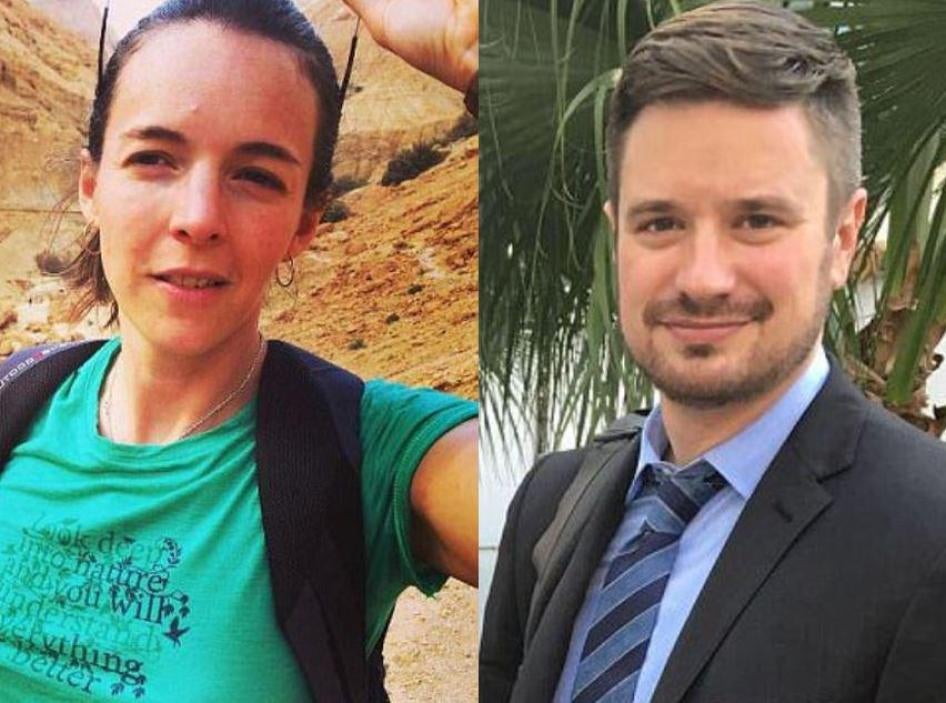
In March 2017, grainy video footage revealed that armed men walked Zaida Catalán, a 36-year-old Swede, and Michael Sharp, a 34-year-old American, through a savanna, sat them down and shot them. The brutal murders of the two United Nations investigators—and the disappearance of their Congolese interpreter and the three motorbike drivers who accompanied them—sent shockwaves across the Democratic Republic of Congo and the broader international community, especially among researchers and human rights defenders working in central Africa.
Nearly nine years on, the families, friends, and colleagues of Catalán and Sharp are still awaiting justice.
The two investigators were abducted and executed while documenting mass killings in Congo’s Kasai region. While then-President Joseph Kabila’s government initially blamed the Kamuina Nsapu militia for the murders, courageous reporting by Congolese and international journalists provided evidence pointing to the role of high-level state officials.
While a Congolese military court convicted over 50 individuals in 2022 for their involvement in Catalán and Sharp’s murders, the trial failed to address evidence of state complicity, including video footage showing government agents facilitating the experts’ travel to the ambush site. The trial was plagued with other issues, including defendants tried in absentia and reported witness intimidation. A ruling on the appeal is expected soon.
Last week, Congo’s National Human Rights Commission issued a statement urging the Congolese judiciary to examine the role of all those cited in official investigations, including those who allegedly ordered the double murder, before the case is closed. The commission also called on the judiciary to take all necessary steps to find out what happened to the four Congolese who accompanied the experts, and to ensure that justice is also delivered for the many Congolese victims of the large-scale massacres in the Kasai region. Paul Nsapu, the commission president, later gave an interview with Radio France Internationale, reiterating these calls and adding that he had evidence that could help “trace the perpetrators back to those who commissioned the crime, to the masterminds behind it.”
Congolese authorities should heed these calls. Sharp and Catalán’s families, along with those of the Congolese victims, deserve the full truth. Genuine justice means exposing and prosecuting all those responsible, regardless of position, and fostering rule of law that safeguards human rights defenders.