

July 17, 2014
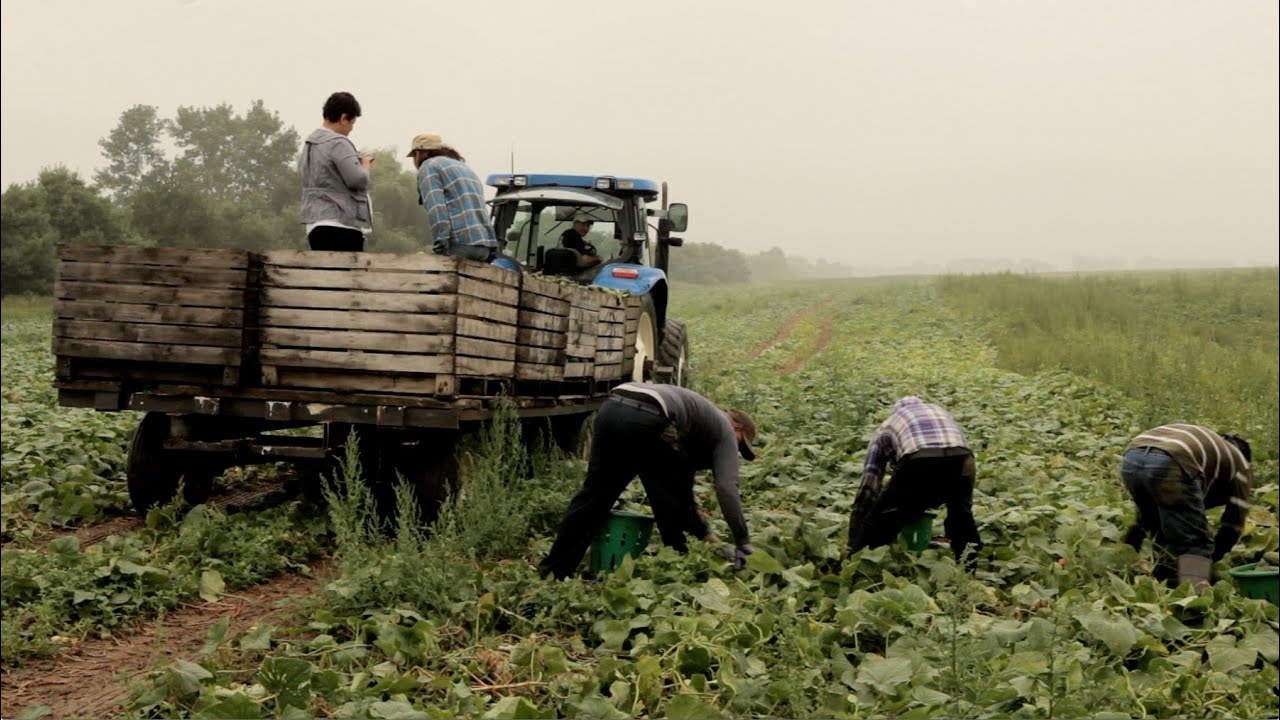
Alina Diaz, a farmworker advocate, with Lidia Franco, Gisela Castillo and Marilu Nava-Cervantes, members of the Alianza Nacional de Campesinas, a national organization that mobilizes farmworker women around the country to engage with policymakers about workplace abuses, including unpaid wages, pesticide exposure, and sexual harassment. Once an undocumented immigrant herself, Diaz is now a US citizen. For her, the farmworkers in her community are "already great citizens" in all but name. She dreams that one day they will go to Washington, not to "demand and scream and march," but to commemorate victory, to say, "Thank you, because you are giving me dignity, because you are treating me as a human being."

Stay up-to-date and get alerts on latest videos

Subscribe

Search

  • July 17, 2014 Video
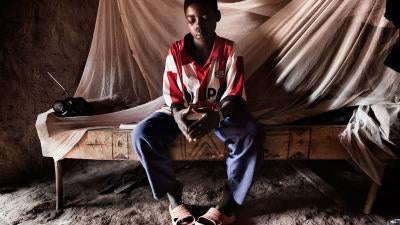
    Hilarion Warren Joseph, 46, a decorated veteran of the first Gulf War and a longtime lawful permanent resident, with his 13-year-old son, Japeri, who wears the jacket from Joseph's US Army uniform. After the war, Joseph said he suffered from post-traumatic stress disorder and attempted suicide three times. He was eventually convicted of transporting guns without a license, which ultimately led the US government to seek to deport him for an "aggravated felony." After three years of immigration detention and litigation, Joseph was able to fight deportation, and now lives with his son Japeri in Brooklyn, New York. But he knows many veterans are not so fortunate and end up exiled from the country they served.

    TORN APART: Hilarion Warren Joseph
    video content
  • July 17, 2014 Video
    Robin Reineke, director of the Colibrí Center for Human Rights, holds the personal effects of unidentified border crossers. Such personal effects are kept at the Pima County Office of the Medical Examiner in Tucson, Arizona, to match families with missing migrants who were last seen alive crossing the border. According to Reineke, from 1990 to 1999, an average of 12 remains of border crossers were brought into the Pima County Medical Examiner's office per year. From 2001 through the present, the average number of remains is 164. "There's been this discourse that security is the automatic obvious need on the border ... more walls, more border patrol, more surveillance, more unmanned aerial drones," she said. "That's the type of strategy that we saw change our landscape into one of death, and it's heartbreaking to see the same type of conversation happening now." This video is part of the feature Torn Apart: Families and US Immigration Reform.
    TORN APART: Robin Reineke
    video content
  • July 17, 2014 Video
    Fermina Lopez Cash, a 47-year-old woman from Guatemala, sits in her home with a photo of her 13-year-old son, Omar, who died in July 2010 in the Arizona desert trying to cross the US-Mexico border to join her and his older siblings in Phoenix. Only 9 years old when she left, Lopez Cash said Omar begged to come to the US as well. A middle-aged woman offered to come with him, and they hired a "coyote" (smuggler) to take them across the border. Almost three years later, the remains of a teenage boy that had been found in the Arizona desert along with those of an older woman, were confirmed as those of Fermina's son.
    TORN APART: Fermina Lopez Cash
    video content
  • July 17, 2014 Video
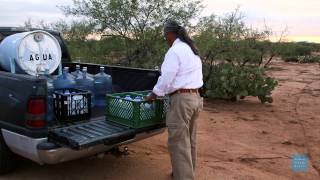
    Mike Wilson, a volunteer with the Tucson, Arizona-based Humane Borders, places containers of water in the desert in the hope of preventing more migrant deaths and leads search missions for families looking for loved ones. Wilson is a member of the Tohono O'odham Nation, on whose reservation many of the migrants have died. Members of his tribe and the congregation he used to serve as a pastor, he said, have criticized him for trying to save lives of people who are breaking federal immigration laws. "As your pastor, I have to choose between two sets of law," he tells them. "Which law is above the other? Federal immigration laws or God's moral, universal law that you take care of the stranger?"
    TORN APART: Mike Wilson
    video content
  • July 17, 2014 Video
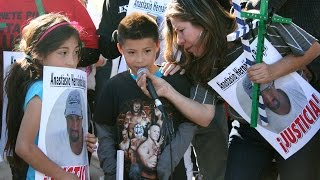
    In 2010, border guards beat and shocked Anastasio Hernandez Rojas with a stun gun at the San Ysidro port of entry near San Diego, California. He died three days later. An autopsy report ruled his death a homicide, with hypertension and methamphetamines as contributing factors. Rojas had been deported a few months earlier and was apprehended when he tried to rejoin his family, including his wife, Maria Puga, and their 7-year-old twins, Daniela and Daniel, pictured here near the wall where their father was beaten. Puga, who has successfully demanded a governmental investigation into her husband's death, says, "I want my kids to grow up peacefully, not with bitterness. That is why I continue to search for justice."
    TORN APART: Maria Puga
    video content
  • September 13, 2013 Video
    Syrian government and pro-government forces executed at least 248 people in the towns of al-Bayda and Baniyas on May 2 and 3, 2013, Human Rights Watch said in a report released on September 13, 2013. It was one of the deadliest instances of mass summary executions since the start of the conflict in Syria.
    Syria: Mass Executions By Government Forces
    video content
  • November 10, 2010 Interactive
    Since September 2008, at least 2,000 civilians have been killed and nearly 3,000 others have been abducted during attacks by the Lord's Resistance Army (LRA). In this feature, victims of this rebel group call upon US President Barack Obama for urgent and decisive action to neutralize the LRA.
    interactive content